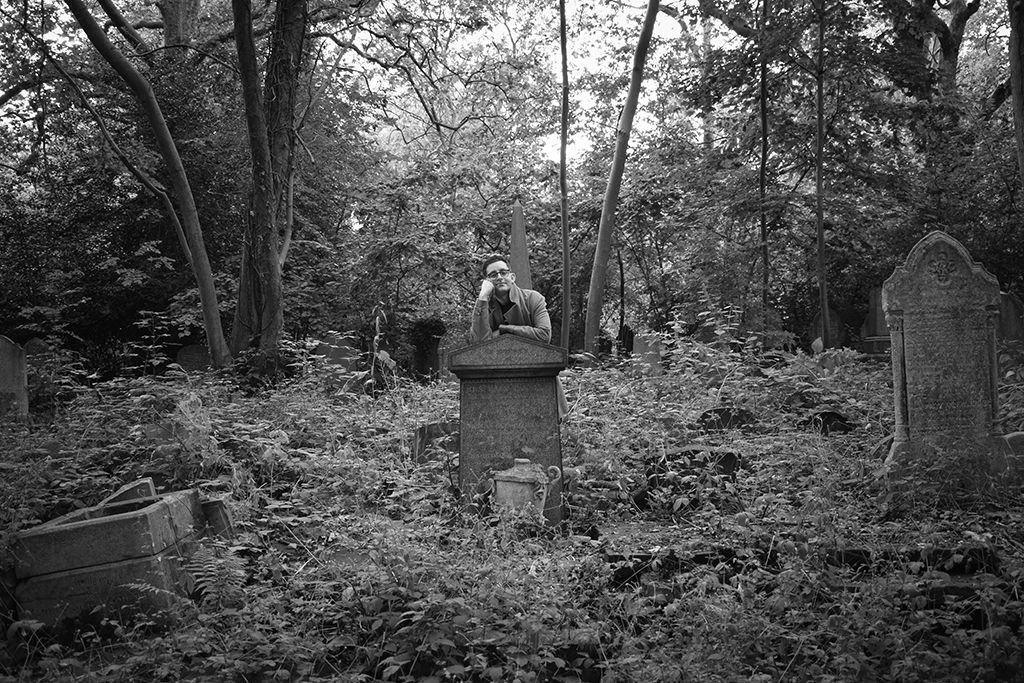
Sheldon K. Goodman is a public historian and tour guide who runs Cemetery Club, exploring cemeteries as “museums of people”. His work focuses on forgotten lives, museums and LGBTQ+ history. We spoke about Deptford’s burial grounds, Victorian funeral traditions and how losing his mother changed his relationship with cemeteries.
Was there a particular grave or person that turned your interest in cemeteries into serious research?
Both my grandfathers had died by the time I was young enough to remember my first cemetery visits: most Sundays of my childhood were spent visiting their graves. I’d be taken to either Chiswick New or Bandon Hill, and when we were there, I never really had the chance to go off and explore who was buried around them.
That used to frustrate me because I genuinely wanted to know who my grandfather’s neighbours were. As soon as I was old enough, I started exploring on my own, without worrying about relatives getting bored or confused.
So passively in the background, I kept looking up headstones, and as digital archives caught up, it made my searching easier.
What can cemeteries tell us about London and Londoners that we would struggle to discover elsewhere?
Cemeteries tell us how Londoners wanted to be remembered, and how their families wanted them to be remembered. Those aren’t necessarily the same thing. Most people never saw the monument erected over their grave: its words, materials and decoration were chosen by those left behind.
Those choices can reveal a great deal about faith, family relationships, social ambition and grief. A biblical quotation, a particular carving or the sheer size of a monument all say something. Victorian families sometimes spent beyond their means on funerals and memorials, asserting a status in death they had struggled to attain in life. You can also trace changing tastes, including a more restrained approach to remembrance after the First World War.
But for me, the headstone is the beginning of the story. It might give you a name, a few dates and an affectionate tribute; it rarely tells you how someone earned their living, what they looked like or whether they ever got arrested. That’s where the research begins. Cemeteries give you a way into the lives of Londoners who might otherwise escape your attention.
What’s the biggest gap you’ve found between how someone was commemorated on a headstone and what your research revealed about them?
One of the most striking examples is Eugen Sandow, the pioneering bodybuilder buried in Putney Vale Cemetery. He was an international celebrity, appointed Professor of Physical Culture to King George V. His physique was his livelihood: he built a career around being seen. Yet for decades after his death, his grave was unmarked.
There are competing accounts of why. His marriage had broken down, and there has been speculation about his sexuality, but I would be cautious about presenting that as a definitive explanation. We don’t know enough to say with confidence why his wife chose not to commemorate him.
What strikes me is the contrast: someone who exercised such control over his public image had so little control over his remembrance. A descendant eventually commissioned the substantial stone monument that marks his grave today, a rather more fitting memorial to a man who made his name through his physique.
What drove London’s move from parish churchyards to large Victorian cemeteries, and how did it change the way Londoners related to their dead?
It was a gradual change, driven by a very practical problem: London was growing, but its burial grounds weren’t. Parish churchyards had served generations of the same families, and many were desperately overcrowded. Concerns about their condition and the effects on public health made reform increasingly urgent.
But these were also familiar places. Your relatives were buried beside the church where you worshipped. You passed their graves as part of everyday life. Moving burial elsewhere meant breaking with that connection, so providing more space wasn’t enough to persuade everyone.
London wasn’t the first to experiment. Norwich’s Rosary Cemetery opened in 1821, offering burial regardless of religious denomination. Other cities such as Liverpool and Newcastle were far more ahead of the curve than London in responding to the crisis, and Nonconformists pushed these changes through, playing an important role in challenging the existing arrangements. There were financial obstacles, too: burial fees provided income for parish churches, so reform threatened established interests.
In London, private companies developed large landscaped cemeteries, inspired by places such as Père Lachaise in Paris. Kensal Green began receiving burials in 1833. These new grounds offered space, planting and impressive monuments, but they also had to win people’s confidence. The Duke of Sussex’s burial at Kensal Green in 1843 gave it considerable prestige.
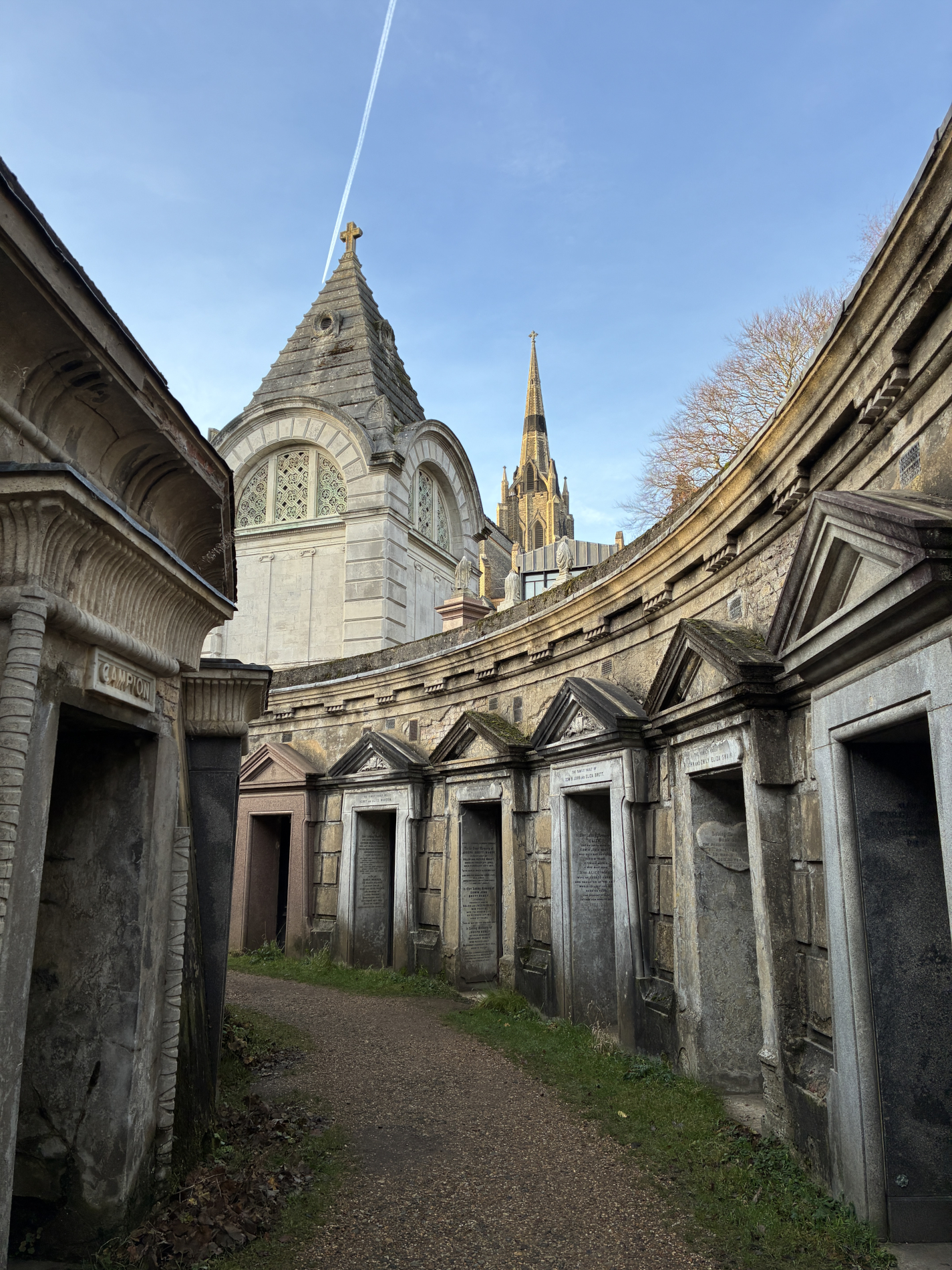
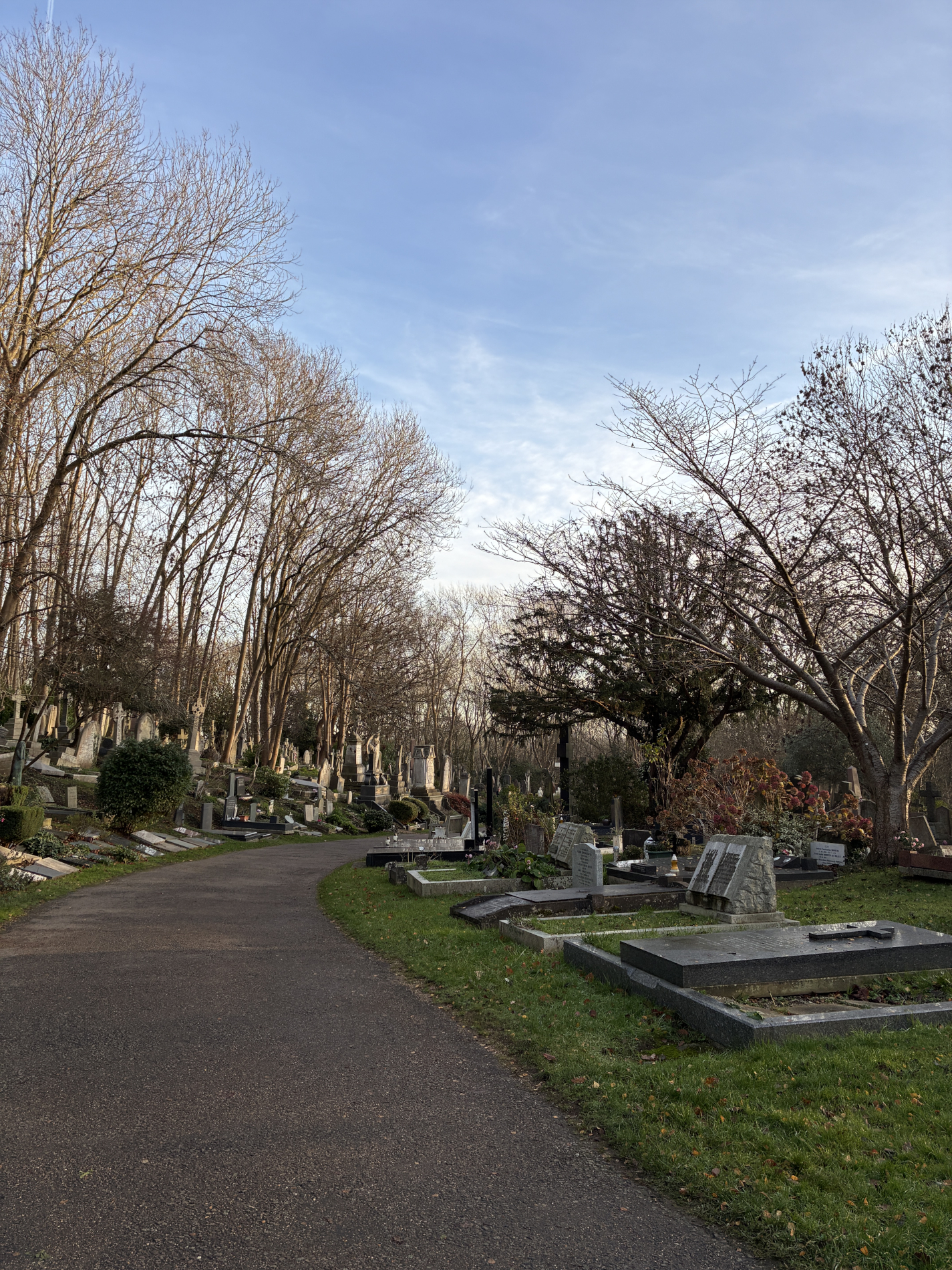
Legislation in the 1850s accelerated the change, allowing overcrowded burial grounds to close and local burial boards to establish public cemeteries.
For Londoners, this changed the geography of grief. Visiting the dead increasingly became a deliberate journey rather than part of the weekly routine of churchgoing. The new cemeteries offered beautiful places for remembrance, but they also put greater distance between the dead and the communities they had belonged to.
If we walked through the churchyards of St Nicholas and St Paul’s in Deptford, what would you want me to notice first? What could those details tell us about the area?
Look closely at the carving. Skulls and crossbones, inverted torches, flowers and lambs form a language of mortality, faith and remembrance.
But ask yourself who could afford to speak that language so elaborately. Someone struggling to make a living beside Deptford Creek was unlikely to have an ornate monument covered in finely carved figures. These churchyards tell us about differences in wealth and status, but unevenly: the people with the grandest memorials are often the easiest to notice. You have to remember those whose graves have left little or no visible trace.
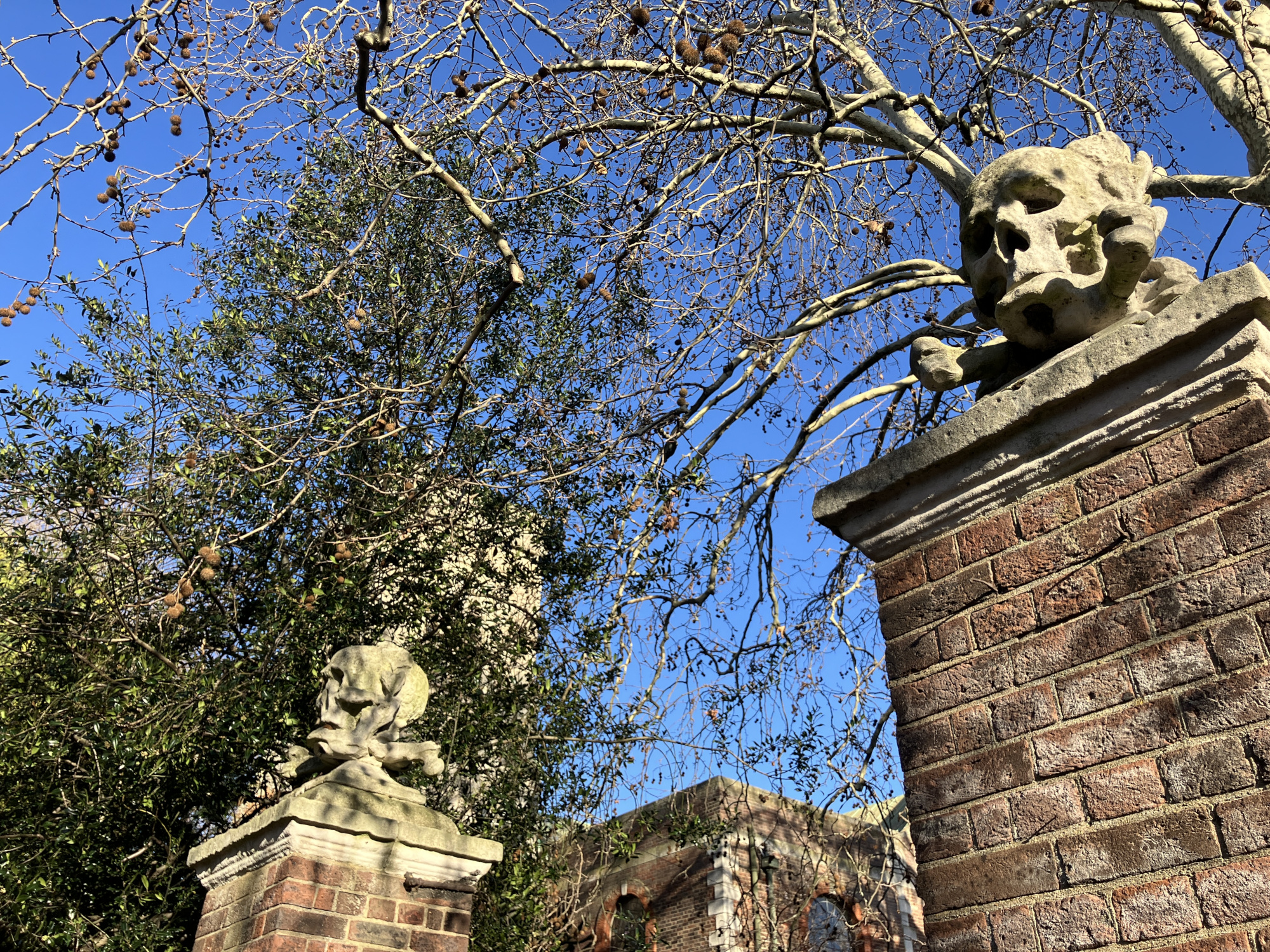
I’d also look for similarities between the tombs. Repeated shapes and decorative details can offer clues about local craftsmanship, changing fashions and how families influenced one another. Perhaps they used the same monumental mason; perhaps someone saw a neighbour’s memorial and thought, “I like that one. I’ll have that for Granny.”
That’s what I’d encourage people to notice: individual memorials, certainly, but also the conversations between them. Even in death, people were choosing how they fit into the neighbourhood. Father John Diamond’s marker is worth finding: he was a legend to the local area. He opened up the crypt of St Paul’s for reggae nights and held masses for Millwall football club.
Where did Deptford residents go to be buried after the old churchyards fell out of fashion?
For Deptford, the main destination was what we now call Brockley Cemetery, which opened in 1858. We tend to speak of Brockley and Ladywell Cemetery as one place, but they began as separate cemeteries: Brockley served Deptford and Ladywell served Lewisham. It wasn’t simply that the churchyards had fallen out of fashion; they were running out of room, and these metropolitan boroughs needed a replacement.
Deptford’s working river, docks and maritime communities shaped the population buried there. Walk through the gates, and you’ll see the familiar monuments of a Victorian cemetery, but there are also extensive areas of common graves, where people were buried without their families purchasing a private plot.
One detail I always point out is the low edging near the boundary with Ladywell. It incorporates old headstones removed from common graves. Once you recognise what you’re looking at, an apparently ordinary piece of landscaping becomes something much more poignant: memorials made to preserve someone’s name have become part of the scenery.
When I worked for Lewisham Heritage, a headstone to William Henry John Philbrook, who died in 1900 at his workplace at the Electric Light Company’s Works in Sydenham, turned up in a back garden in Downham. How it got there is anyone’s guess, but I suspect a family member took it after the area was cleared for landscaping. It’s now in the Lewisham Heritage collection, an individual memorial that has found its way into the area’s collective history.
Do you have a favourite grave in London?
That would have to be my mum’s grave, which is the most important place in the world to me at the moment. She died in February from a whole battery of things, and losing her has fundamentally changed my relationship with cemeteries. This time last year, I might have been planning a trip to Brighton, Key Hill in Birmingham or Hampstead. Now, I visit Beckenham, where she’s buried. I spend most of my Sunday afternoons there with a Bluetooth speaker playing her favourite music, weeding and planting around her.
Mum loved flowers and her garden, so I thought, “Right, I’ll probably bankrupt myself in the process, but I’m going to make where she’s buried as well kept as her garden was.” With the cemetery’s permission, I’ve been cleaning headstones and planting the surrounding graves as well: there was a little four-year-old boy called Francis Wand near mum whose grave I took pity on; he died in 1924 and is there all on his own, and I planted it up with cyclamen as a tribute. The response on social media has been wild. I feel a duty of care for those who likely haven’t had a mourner for a long time, and it’s the least I can do.
Mum is now surrounded by flowers, including some from her own garden. Forget-Me-Nots and foxgloves have been relocated to be by her side. Caring for the place has become a way for me to keep caring for her. Knowing that one day my ashes will be in the same plot gives it another meaning again: this will be my grave as much as it’s hers at the moment.
The other graves on my vast research pile can wait for now, although I’m still doing my Halloween and heritage tours around my beloved Tower Hamlets Cemetery Park. Most nights I strain my eyes pouring over the shockingly kept cemetery records, researching sex workers, dockers, pugilists and histories that don’t tend to get much focus.
Support my work by subscribing to Hypertextual, a newsletter about science and big ideas.