
Cold, smoke-filled London woke up on Monday, 27 March 1905. For most of the city, it was just another miserable morning. In Deptford, it was the beginning of a murder mystery.
By 8.30 am, the manager of Chapman’s Oil & Colour Store would usually be smoking his pipe outside. But when the assistant arrived, the door was locked. He knocked. No reply. Through the letterbox he saw chairs knocked over. Something was off.
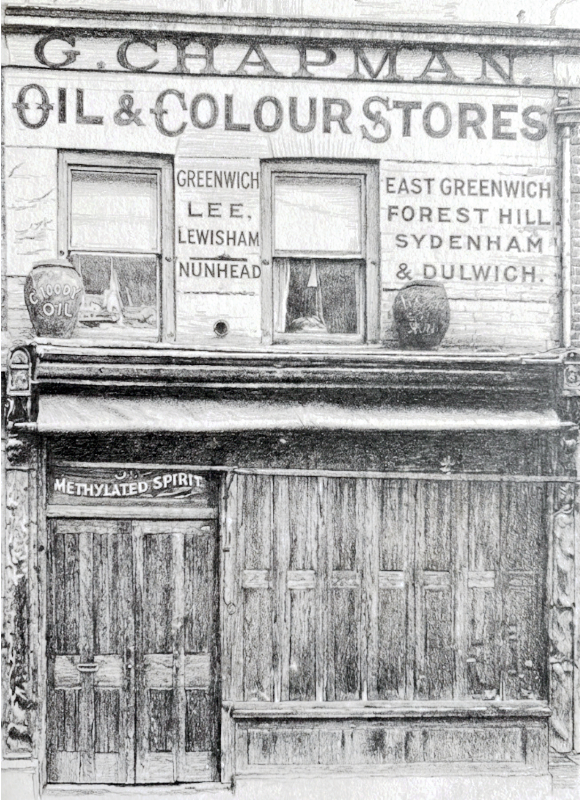
Inside the shop, the scene was worse than it looked. Thomas Farrow, the elderly manager, lay dead on the floor. Upstairs, his wife, Anna, was unconscious. She died days later.
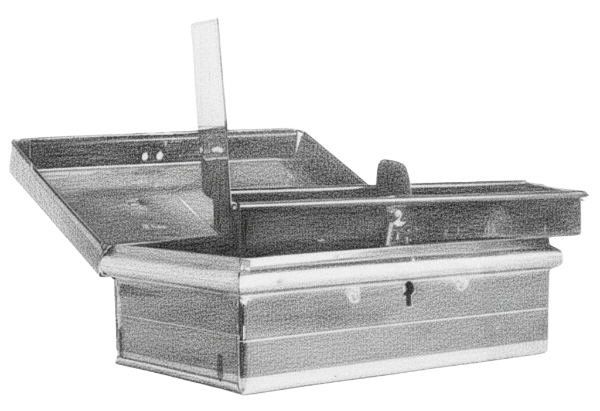
Police searched the shop: no signs of forced entry. £13 — a week’s earnings — missing from the cash box. Only items left behind: two black masks made from women’s stockings. But who were the masked men?
Locals later recalled two men slipping out of the shop at 7.15 am. One was identified as Alfred Stratton, known for petty violence; the other matched his younger brother, Albert. Both lived nearby, passing the shop almost every day.
They had no criminal record, but Alfred’s girlfriend raised alarms. He’d asked for old stockings the night before, then came home smelling of paraffin, likely used to scrub away blood.
Alfred suddenly had money he didn’t usually have; she told the police where some of it was: £4 buried near the Ravensbourne. The case moved quickly after that.
Officers arrested Alfred at the King of Prussia pub on 2 April, and Albert the next day on the High Street. Both were charged at Greenwich Police Station on Blackheath Road.
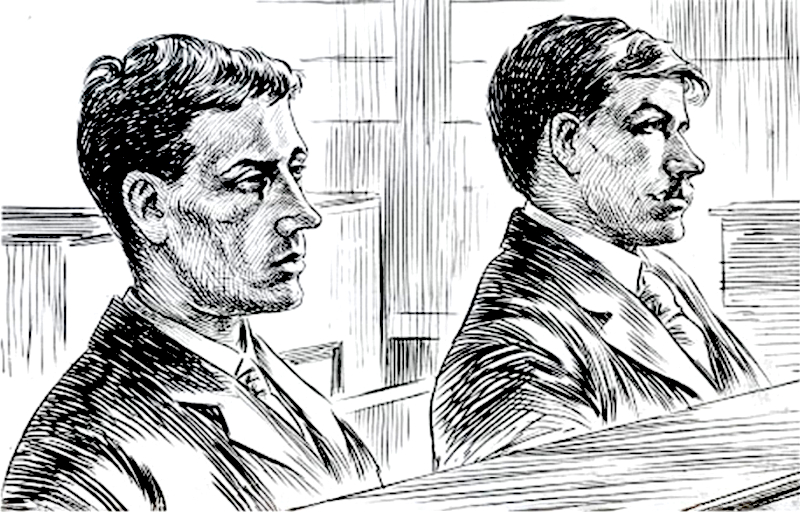
By now, the entire case had unfolded within walking distance, from the crime scene to the police station. Next, it would be replayed, step by step, in court — and the real drama was about to begin.
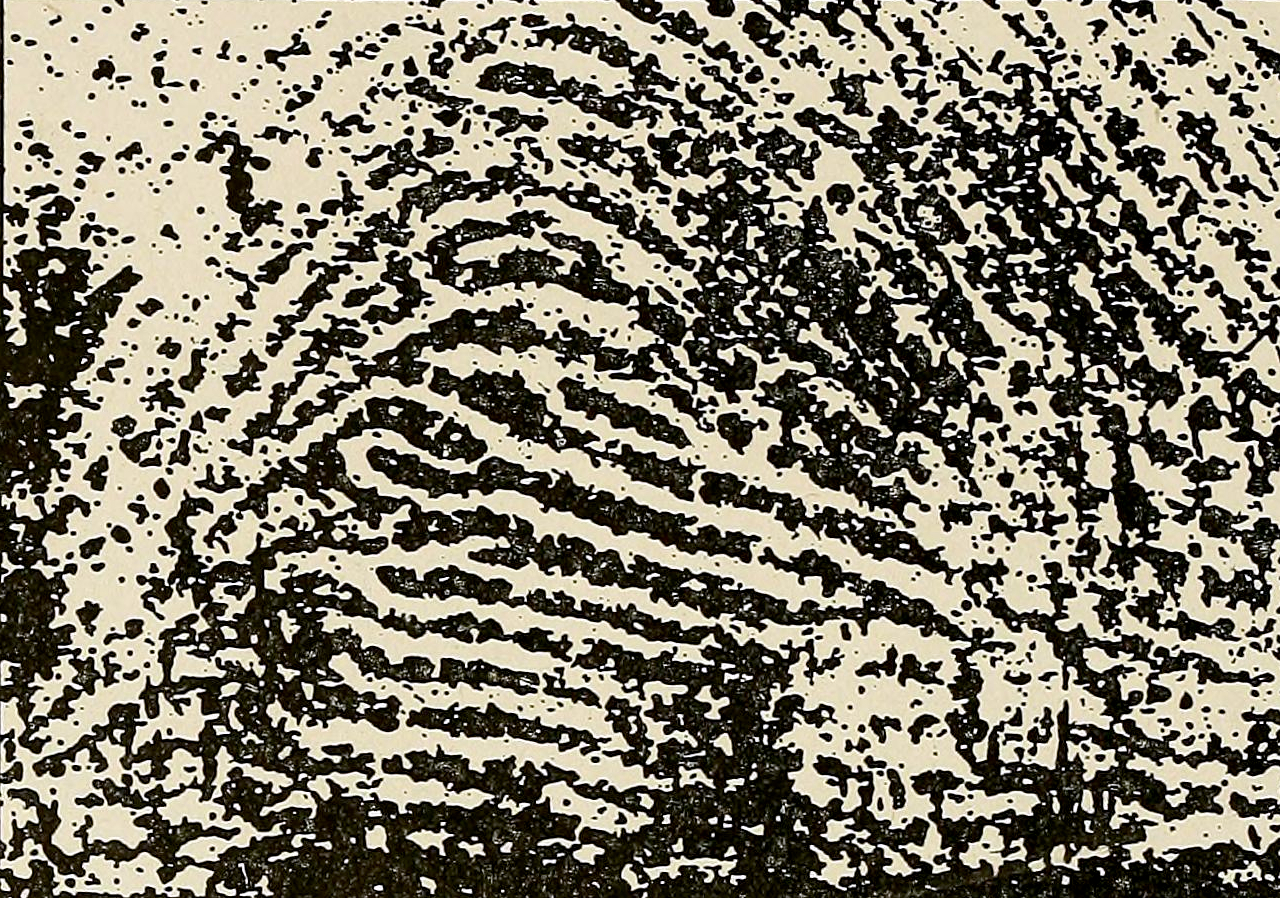
The whole case balanced on a single piece of evidence. While searching the shop, detectives noticed a greasy smudge on the cash box. It looked like a fingerprint. It belonged to neither Thomas nor Anna, nor to the first officer on the scene. In 1905, fingerprints were not routinely taken. Unless the killer was already on file, the clue would lead nowhere.
Inspector Charles Stockley Collins, Scotland Yard’s fingerprint specialist, took over. As he later told the court, “Until the arrest of Alfred Stratton, I had not been able to find any fingerprints that I tried which agreed with the print upon the cash box.” Halfway through the search, Collins might well have wished for a machine that could scan the archive in seconds. After the Strattons were arrested and charged, their fingerprints were taken. The mark on the cash box matched Alfred’s right thumb.
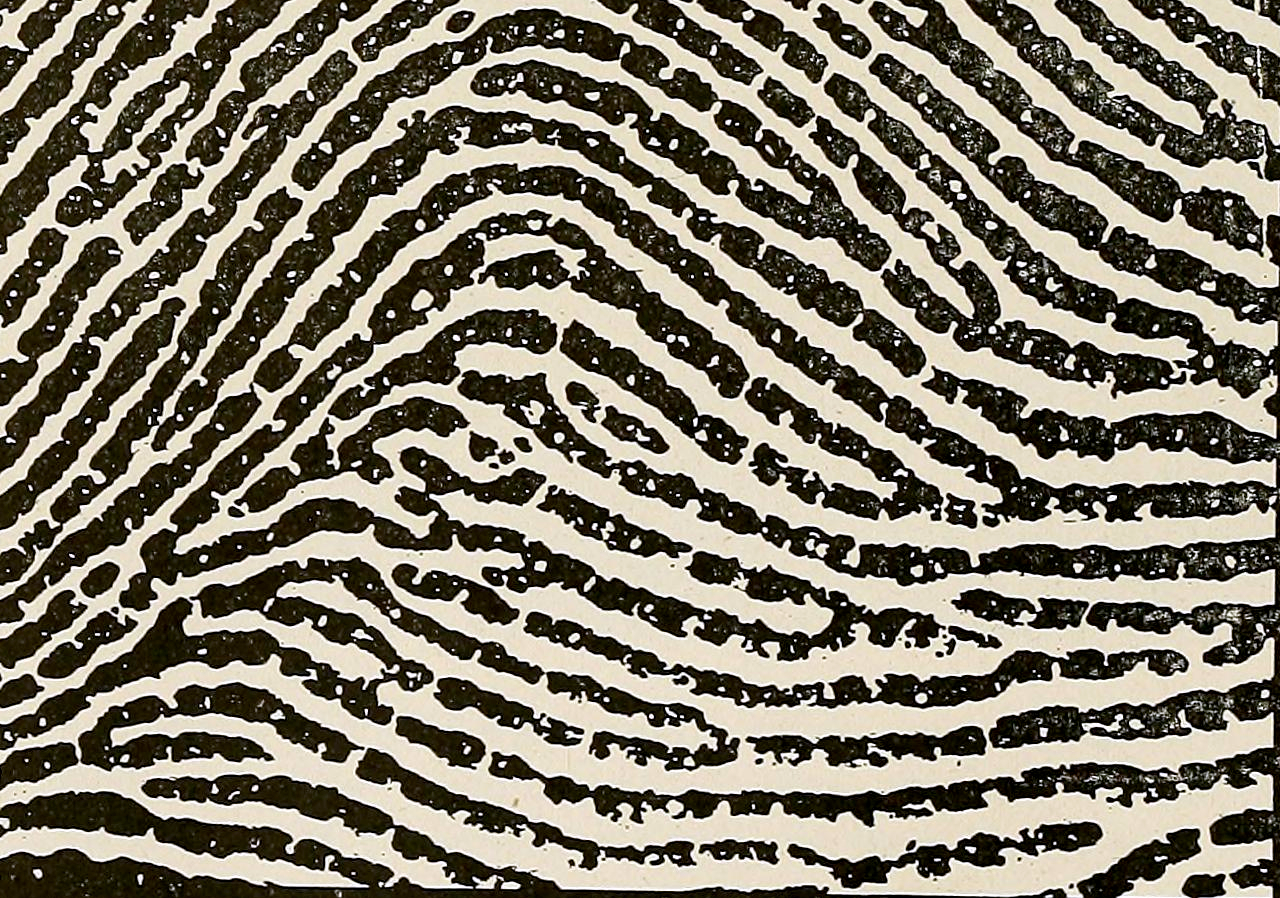
At trial, the prosecution leaned heavily on fingerprint science. This was Collins’ moment. Addressing the jury, he explained that Scotland Yard held between 80,000 and 90,000 sets of fingerprints — between 800,000 and 900,000 individual digit impressions — and that in his experience, he had never found two different fingers to correspond. Not one. In all his years, no two different fingers had ever matched on more than three characteristics. Alfred’s matched eleven.
Then came the visuals — and boy, were they impressive. Enlarged photographs of the ridges on the cash box. The same ridges on Alfred Stratton’s thumb. Did they match? You bet they did.
Case closed? Can the jury go home now? Not yet.
Fingerprint evidence had solved burglaries before, and it had surfaced in murder cases abroad, in Argentina in 1892 and in India in 1898, but it was still a novelty. In Britain, no one had dared put it to the test in a high-profile trial. Not until Deptford.
It gave the defence an opening. Their expert was Dr John Garson. When he called Collins his pupil, the implication was clear: the man who trained the prosecution’s witness was now here to correct him. After examining the prints, he concluded they were not conclusive: the two images “may be fingers of the same person, but they are not the same fingers.”
There was only one problem with his testimony: it was hard to know whose corner he was in. Under cross-examination, Garson admitted he had offered his expertise to both sides before even seeing the print. He wrote two letters on the same day, 26 April 1905. One offered his services to the defence. The other offered them to the prosecution. He was advertising his availability. Whoever paid first got the opinion. Confronted, Garson replied: “I am an independent witness.” The judge called him “unreliable.” This was judicial courtesy. In practice, Garson had turned the trial into a job interview.
Fingerprint adoption timeline
The jury did not take long. After less than two hours of discussion, they found Alfred and Albert Stratton guilty. On 23 May 1905, the brothers were hanged at Wandsworth Prison, the first people in Britain condemned with the help of a fingerprint.
From that point, detectives knew they were no longer alone with their hunches. Surfaces, objects, and traces could now speak for themselves. In a small shop on Deptford High Street, a single thumbprint showed what forensic science would become.
If you want to go deeper, I’ve put together an extensive Deptford crime timeline.
References
- Fingerprints: The Origins of Crime Detection and the Murder Case That Launched Forensic Science. Colin Beavan
- Murder Houses of South London. Jan Bondeson
- The Crime Book. Shanna Hogan et al.
- Personal Identification: Methods for the Identification of Individuals, Living or Dead. Harris Hawthorne Wilder & Bert Wentworth
- The Stratton Brothers: The UK’s First Murder Case Solved by a Fingerprint. Richard Clark
- Fingerprint Saw Brothers Hanged for Brutal Murders. Jan Bondeson
- How the Stratton Brothers Became the First British Killers Busted by a Fingerprint. Robert Walsh
- Stratton Brothers. Murder of the Farrows: Daily Mirror Reports 1905. Old Deptford History
- ‘Mask Murder’ Brothers Hanged for Slaughter of Pensioners During a Botched Robbery — First Convicted of Murder Using Fingerprint Evidence. Steve Myall
- In 1905, Fingerprints Pointed to Murder for the First Time in London. Jennifer M Wood
- Deptford 1905. Caroline Derry
- Farrow Murders: The 1905 Deptford Case That Sparked a Fingerprint Revolution. George Pallas
- Fingerprints: The First ID. Melissa Bender
- 2nd May 1905: Alfred Stratton and Albert Stratton. The Proceedings of the Old Bailey
Support my work by subscribing to Hypertextual, a newsletter about science and big ideas.